
Wine bottle label sizes: measure a 750 ml bottle for print
Measure the bottle you will actually fill, turn the dimensions into a label specification, and prepare a quote that keeps every front, back and neck label aligned across your SKUs.
THE SHORT ANSWER
Enter your container size to get the label size, then price it. Size a wine label to the actual bottle, not its capacity. Record the usable label panel, choose front/back or wrap geometry, and confirm the construction and roll specification before production.
- Dimensions: width × height, with inches or mm stated explicitly.
- Wrap: circumference minus a gap, or plus an overlap.
- Fit: check the bottle drawing, paper template and adhesive sample.
- Order: separate each component, artwork revision and SKU in the quote schedule.
Find your label size
Measure the usable panel on the real container, not the capacity printed on it. Enter the diameter and the panel height. A full wrap is the circumference (π × diameter) plus a small overlap, or minus a small gap.
Wrap calculator
8.29 × 3.63 in
Circumference 8.17 in · 1/16 in clearance top and bottom
Planning math for a straight cylinder: wrap = π × diameter + overlap. Confirm with a full-size mockup on the real container.
Why start in PackOS
Once you know the details, see the price, the dieline and your label on a roll in one place.
From file to price in PackOS
What you get in PackOS
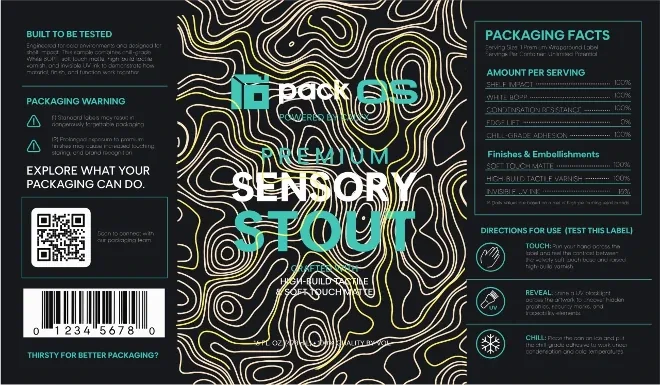
Skip the spec form
Upload a PDF or AI file and PackOS reads the size, shape, colors and finishes from your design. Nothing to retype.
Upload artwork →Instant price · sample label
| Run | Per label | Total |
|---|---|---|
| 10,000 | $0.1996 | $2,346 |
| 60,000 | $0.1692 | $10,500 |
| 110,000 | $0.1670 | $18,722 |
| 150,000 | $0.1663 | $25,290 |
| 200,000 | $0.1658 | $33,500 |
| 250,000 | $0.1655 | $41,725 |
Know the price before you ask
Every quantity is priced as soon as the file is read, with no waiting on a quote. Runs start at 10,000 labels per size with at least 2,500 per SKU. Your price depends on your artwork. Order online; the proof and a payment link follow by email.
Get instant label pricing →
Get a production dieline
No artwork yet? Draw the die with cut, bleed and safe-area lines so your designer starts from the right shape. We email it with your quote.
Create a label dieline →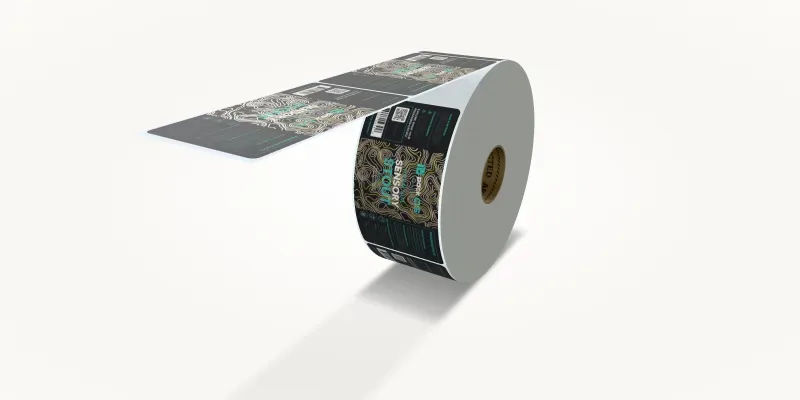
See it on the roll first
Turn your label on a 3D roll in the copy position you choose and check it before you order.
Upload artwork →Labels only. Foil, embossing and other specialty work are quoted by our team.
What size label fits your wine bottle?
A bottle's 750 ml capacity does not specify its label dimensions. Start with the actual bottle's usable label panel and the artwork that must fit inside it. Bordeaux, Burgundy, sparkling-wine and custom spirits bottles can have different shoulders, curves and straight body heights, even at the same capacity.
Ask the glass supplier for the bottle drawing and recommended labeling area. Then check a physical sample from the intended bottle supply. A paper mockup helps you assess placement and appearance; an adhesive sample and applicator trial answer different questions about production fit.
Bottle fit, artwork approval and regulatory approval are separate checks. For US wine, have the responsible compliance reviewer confirm the required statements and their placement using TTB's wine-labeling guidance.
Pick a size, then draw the label with bleed and a safe area.
Create a label dieline →Wine label dimensions in inches and millimeters
Use these rectangular dimensions as paper trial templates, not recommended sizes for every 750 ml bottle. Cut the chosen width and height from paper and check it against your bottle's label panel. A 375 ml bottle, a magnum or a different bottle supplier needs its own measurement; do not scale a label only by capacity.
| Inches | Millimeters | Check on the sample |
|---|---|---|
| 3 × 4 in | 76.2 × 101.6 mm | Can the artwork fit with the printer's required safe area? |
| 3.5 × 4 in | 88.9 × 101.6 mm | Do the edges stay within the intended body panel? |
| 4 × 4 in | 101.6 × 101.6 mm | Does the wider panel preserve the front/back spacing? |
Record the final choice as finished width × finished height, with units. Bleed extends beyond that finished edge; the artwork safe area sits inside it. Neither changes the finished label size. Confirm the die, corner radius, bleed and tolerances using the label dieline and bleed guide and your printer's specification.
Measure your bottle, then do the wrap math
- Mark the usable body panelIdentify the straight section between the shoulder and base transition. Record its height and the agreed top and bottom clearances.
- Measure around that panelUse a flexible tape or paper strip for circumference. For a circular, straight-sided body, circumference = π × diameter. Compare measurements near the top and bottom of the proposed label area to check for taper.
- Choose the seamA wrap with an open gap uses width = circumference − gap. An overlapping wrap uses width = circumference + overlap. Agree the seam allowance with the printer and applicator operator.
- Check the physical sampleApply a paper template at actual size, then qualify the proposed adhesive construction on the real bottle before approving production.
If the measured label area is 4.500 in high and the agreed clearances are 0.125 in at each end, the planning height is 4.250 in (108.0 mm). These example allowances are not universal printer or applicator requirements.
Use the label size calculator with your measurements. In full-wrap mode, enter a negative seam value for a gap and a positive value for overlap. Its presets and front/back proportions are planning estimates. It does not establish a production dieline for tapered, oval or irregular bottles; have the supplier review those shapes.
For other container formats, see how to measure a container for labels.
Turn the finished width and height into a dieline, with bleed outside the edge and the safe area inside it.
Create a label dieline →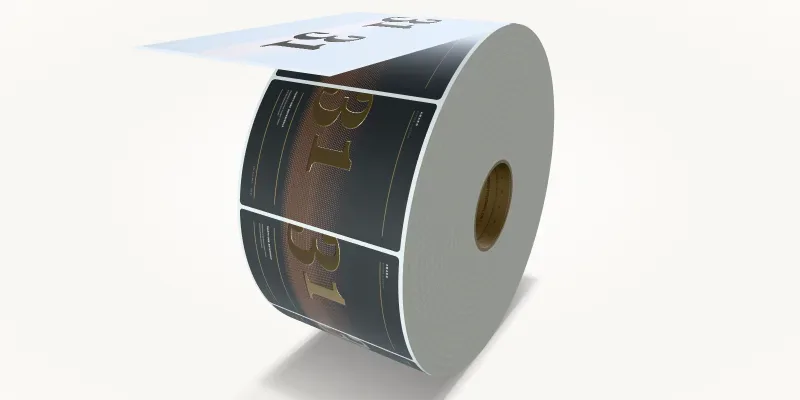
Finish picker
Compare gloss, matte and soft touch
See the same label under each laminate, then upload your artwork for an instant price.
Compare the finishes →Front, back, neck and shoulder labels need separate dimensions
- Front label: size the brand panel to the intended viewing area and usable body height. Check how much of the design wraps away from the front view.
- Back label: allocate space for the approved copy and barcode. It does not have to match the front label's width or height.
- Front/back pair: check both side gaps together. On a circular body, front width + back width + the two gaps must account for the circumference at the label position. Confirm alignment and tolerances with the applicator operator.
- Neck or shoulder label: treat it as a separate shape and construction review. A body-label rectangle may wrinkle or lift on a tapered or compound-curved surface.
Give every component its own dimensions, artwork revision and quantity. If a bottle uses one front and one back label, an order for 10,000 bottles needs 10,000 of each before any agreed production allowance. State label quantities explicitly in the order schedule.
Qualify labels for condensation and ice buckets
Specify application conditions separately from service conditions. A label applied to dry glass at room temperature and later chilled is a different use case from a label applied to cold glass with condensation.
An adhesive's ability to survive ice water does not by itself establish that it will hold when applied to wet or condensation-covered glass.
Labeling cosmetics? Start with the cosmetic label page.
Cosmetic labels →Ask the supplier to recommend the complete facestock, adhesive, liner and finish. Wet-strength paper and film are candidates to review; a material category alone does not guarantee performance. Test the selected construction and printed finish together on the actual bottle.
- Record bottle surface condition, application temperature and conditioning time before exposure.
- Agree the chilling, condensation or ice-water exposure the product must withstand.
- Check edge lift, wrinkles, paper appearance, ink rub, barcode readability and residue against agreed criteria.
- If the bottle is returnable, confirm the actual wash process and removal requirements separately. Do not infer wash-off or recycling performance from the word “removable.”
Use the label material qualification checklist to record the sample and trial results. The supplier's technical data and your application trial govern approval.
Instant label pricing
Upload your artwork and see the price
Drop in a PDF or AI file. PackOS reads the size, shape and colors and prices it from 10,000 labels per size.
Upload artwork →Labeling a full wine or spirits line? Talk to our team.
Book an enterprise demo →Prepare a multi-SKU wine-label quote with packOS
Bring the measured bottle specification into the free label SKU schedule and quote-comparison worksheets. Use separate rows for front, back and neck labels, and for artwork revisions, delivery destinations or release dates that differ.
- Identify the bottleSupplier, bottle reference, drawing revision, sample and confirmed label panel.
- Define each labelFinished dimensions and units, shape, component position, artwork revision and construction or performance requirement.
- Specify the rollUnwind direction, core diameter, maximum roll diameter, labels per roll and spacing, confirmed with the co-packer or applicator operator.
- Plan the releasesQuantity by SKU and component, first-order and reorder dates, destinations, approver and any outstanding trial.
Compare digital and flexo quotes on the same specification, including tooling, finish, proofing, freight and changed-artwork reorders. Confirm proposed dimensions and production requirements with the supplier before approving the job.
Start a label quote with your artwork and confirmed inputs. Quick Quote prices our film label stocks instantly; estate, textured and other wine papers are quoted by our team. The food and beverage label page has more on wine and beverage labels. For an enterprise program spanning vintages, brands or co-packers, use the custom roll-label buying guide to prepare the review.
Frequently asked questions
What size label fits a 750 ml wine bottle?
There is no single size determined by the 750 ml capacity. Measure the usable label panel on your actual bottle. Trial rectangles such as 3 × 4 in, 3.5 × 4 in or 4 × 4 in can help assess appearance, but none is a guaranteed fit. Confirm the final dimensions with the bottle drawing, printer and applicator operator.
How do I measure a wine bottle for a label?
Measure the usable body height and circumference where the label will sit. On a circular, straight-sided body, circumference equals pi times diameter. Subtract the agreed gap for an open seam or add the agreed overlap. Check a paper template on the bottle, then qualify an adhesive sample.
What are wine label dimensions in millimeters?
Multiply inches by 25.4. A 3 × 4 in label is 76.2 × 101.6 mm; a 3.5 × 4 in label is 88.9 × 101.6 mm; a 4 × 4 in label is 101.6 × 101.6 mm. These are dimension conversions, not bottle-fit specifications.
Should a wine wrap label have a gap or overlap?
Either geometry can be specified, but they require different widths. A gap is subtracted from the circumference; an overlap is added. Confirm the chosen seam and allowance with the printer and applicator operator. In the packOS calculator, full-wrap mode uses negative seam values for a gap and positive values for overlap.
Can the same label fit Bordeaux and Burgundy bottles?
Do not assume that it will. Compare the actual bottle drawings, usable label panels and physical samples. A change in shoulder shape, diameter or taper can require different dimensions or a different label construction, even when bottle capacities match.
What label material should I use for an ice bucket?
Ask the supplier to qualify the complete label construction for the expected exposure. Record whether application is to dry or condensation-covered glass, the application temperature and the later chilling conditions. Test the printed sample for appearance, adhesion and readability; a material name alone does not prove suitability.
Does the government warning affect wine label size?
Required statements need space and legibility within the artwork. Have the responsible compliance reviewer confirm the applicable US requirements using current TTB guidance before approving the layout. A bottle-fit calculation or printer proof does not establish regulatory approval.