
Custom Label Cost & Quote Comparison
A lower printed-label price can still produce a higher first-order total. Use a matched specification, a charge-by-charge comparison and a realistic release plan to understand custom label cost before choosing a supplier.
THE SHORT ANSWER
See the price for every quantity as soon as your artwork is read. Compare the complete delivered order, not only the printed-label line. Match the construction, artwork, quantity by SKU and roll requirements; then reconcile setup, tooling, proofing, freight and other charges. Compare first releases and unchanged reorders separately, and qualify any proposed material or finish substitution.
Why start in PackOS
Once you know the details, see the price, the dieline and your label on a roll in one place.
From file to price in PackOS
What you get in PackOS
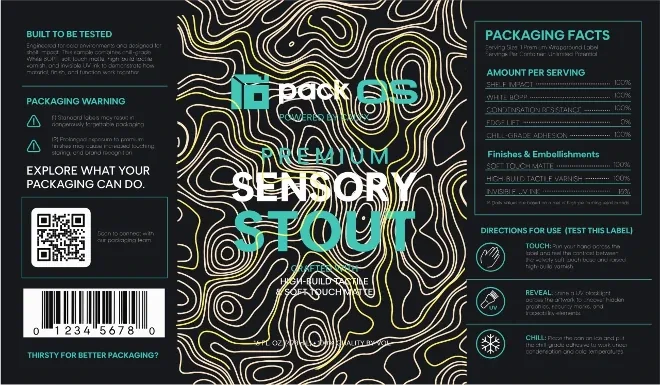
Skip the spec form
Upload a PDF or AI file and PackOS reads the size, shape, colors and finishes from your design. Nothing to retype.
Upload artwork →Instant price · sample label
| Run | Per label | Total |
|---|---|---|
| 10,000 | $0.1996 | $2,346 |
| 60,000 | $0.1692 | $10,500 |
| 110,000 | $0.1670 | $18,722 |
| 150,000 | $0.1663 | $25,290 |
| 200,000 | $0.1658 | $33,500 |
| 250,000 | $0.1655 | $41,725 |
Know the price before you ask
Every quantity is priced as soon as the file is read, with no waiting on a quote. Runs start at 10,000 labels per size with at least 2,500 per SKU. Your price depends on your artwork. Order online; the proof and a payment link follow by email.
Get instant label pricing →
Get a production dieline
No artwork yet? Draw the die with cut, bleed and safe-area lines so your designer starts from the right shape. We email it with your quote.
Create a label dieline →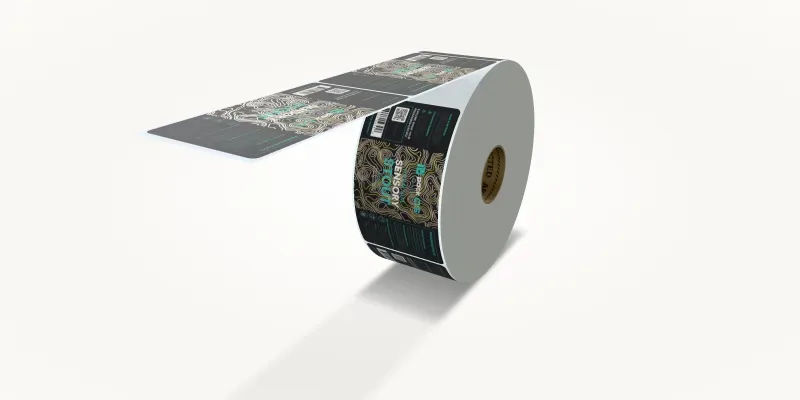
See it on the roll first
Turn your label on a 3D roll in the copy position you choose and check it before you order.
Upload artwork →Labels only. Foil, embossing and other specialty work are quoted by our team.
What belongs in a custom label quote?
Ask for a price against a finished-label specification. Record the dieline, artwork revision, construction, print and finish requirements, quantities by SKU and roll format. A label’s dimensions affect material use and the supplier’s layout, but dimensions alone do not determine price.
Ask which charges are included in the printed-label line and which are separate. Keep currency, delivery destination, shipping terms, quantity tolerance, quote expiry and the condition that starts lead time visible. Mark missing answers as unconfirmed.
Use the construction specification checklist to match face stock, adhesive and liner grades. A quote is not application-trial approval; keep the supplier’s proposed material and any alternate linked to the relevant evidence.
No file yet?
Open a sample label in PackOS
Load the Sensory Stout sample to see the price, the dieline and the label on a 3D roll before you upload your own.
Open the sample label →The seven cost drivers to compare
| Driver | What to compare | Question for the supplier |
|---|---|---|
| Size and layout | Finished dimensions, die shape, spacing and production layout | Does an existing die match the required geometry, and what charges remain? |
| Construction | Exact face stock, adhesive, liner and supplier code | Is this the specified construction or a proposed substitute needing qualification? |
| Printing and artwork | Artwork revision, process route, white ink, special colors and variable data | Which prepress, color or imaging charges are included? |
| Finish and conversion | Coating, laminate, embellishments, cutting, inspection and roll handling | Does the proposed route require separate tooling, setup or passes? |
| Tooling | Plates, cutting dies and finish-specific tooling | Who owns and stores it; what can be reused on an unchanged order? |
| Quantity and SKU mix | Quantity per version, number of releases and allowed over/underruns | Which minimums and shared charges apply to this specific schedule? |
| Roll and delivery requirements | Unwind, core, outside diameter, labels per roll, destinations and freight | Can the specified roll build and shipping scope be supplied at this price? |
Connect your unwind specification and roll limits to the quote. A low price for a roll your applicator cannot use is not a useful saving.
Digital versus flexo: compare the actual route
DIGITAL
- Can avoid the printing plates used in a plate-based route
- Still involves work such as file validation, color review, material preparation and finishing setup
- Quotes may bundle charges or use different consumables models
- Changing an image does not make every part of a multi-SKU job free
FLEXO
- Quotes may separate plates, setup and running charges
- A plate charge covers the printing plates needed for the plate-based route
Finishing, white ink, special colors, cutting and roll handling can change either route’s economics. Neither the process name nor one universal crossover quantity tells you the delivered cost.
Ask the supplier to price the same specification at the quantities and release schedule you expect to use. Compare first release, unchanged reorder and artwork-change scenarios using the digital versus flexo quote checklist. Manufacturer equipment examples describe different configurations; they do not establish packOS equipment, pricing or availability.
Have your artwork? See the price for every quantity in seconds.
Get instant label pricing →Compare first orders and unchanged reorders
Request a line total for each SKU and identify shared order charges. Allocate a shared charge once across the relevant SKUs using a stated method. Do not add the entire setup charge to every SKU and then add it again to the order total.
Comparable delivered cost per label = reconciled delivered order total ÷ quoted delivered label quantity.
Include agreed printed-label charges, tooling, setup, proofing, freight and other applicable charges. Record exclusions and confirm tax treatment and shipping terms with the supplier. If actual charges or delivered quantity change, reconcile the final invoice separately.
Ask which charges apply once, which repeat with every release and which change with the artwork. Tooling reuse requires confirmation of the approved revision, availability, condition, ownership, storage and any repeat charges.
Have artwork and quantities by SKU ready? Put your own specification next to the worksheet rows.
Upload artwork for an instant quote →Dieline generator
Make a production label dieline
Enter the size and shape and get cut, bleed and safe-area lines before the artwork is final.
Create a label dieline →Worked example: print price versus order total
These fictional rows come from the packOS comparison worksheet. They are arithmetic illustrations, not packOS prices, supplier quotations or market benchmarks. Their 5,000-label quantity does not describe packOS order availability; packOS label orders start at 10,000 labels per label size, with at least 2,500 per SKU. Confirm available quantities in your quote.
| Example | Print line | Tooling | Setup | Freight | Other | Total | Quantity | Cost per label |
|---|---|---|---|---|---|---|---|---|
| A · first release | $640 | $0 | $0 | $48 | $0 | $688 | 5,000 | $0.1376 |
| B · first release | $395 | $285 | $120 | $62 | $20 | $882 | 5,000 | $0.1764 |
| B · unchanged reorder | $395 | $0 | $120 | $62 | $20 | $597 | 5,000 | $0.1194 |
B has the smaller printed-label line but the larger first-order total. Its illustrated unchanged reorder removes the $285 tooling charge while retaining setup. That does not establish which supplier to choose.
The worksheet rows still have different quantity tolerances and open questions about material substitution, tooling and roll requirements. Resolve these differences before treating the totals as a purchasing comparison. A cheaper unqualified alternate is a different proposal.
Download the supplier quote comparison (CSV). Replace the worked examples with confirmed quotes; the worksheet does not calculate prices or choose a supplier. The worksheet instructions explain included and shared charges.
Reduce avoidable cost without changing the approved label
- Check existing tooling. Ask whether an available die matches the required dimensions, corners and construction. Confirm availability and remaining charges before treating it as a saving.
- Coordinate compatible SKU releases. Matching dimensions may help, but common construction, finish, roll requirements and supplier planning also matter. Obtain confirmation of shared charges and keep quantities and revisions separate.
- Resolve artwork questions before release. Agree the dieline, bleed and artwork requirements, proof route and named approver. A changed file can affect tooling or qualification.
- Review optional finishes against the requirement. Ask about appearance and protection tradeoffs. Do not assume varnish, laminate, paper or film substitutions are equivalent. Explore label finish options with the construction and acceptance criteria in view.
- Order against realistic demand. Compare quantity breaks with expected use, storage limits and planned artwork changes. A lower purchase price per piece is only part of the decision.
Labeling cosmetics? Start with the cosmetic label page.
Cosmetic labels →Include unused stock and qualification risk
Separate purchase unit cost from cost per label you expect to use. In a purely illustrative inventory example, a $1,000 order of 10,000 labels looks cheaper per piece than it is once some stock goes unused:
This is a planning calculation, not a packOS quote.
For an actual order, state the usage assumption and keep uncertain quantities visible. Consider obsolete artwork, damaged or rejected stock, minimums, repeat shipments and any agreed qualification expense. Do not turn a forecast into a guaranteed saving.
If a cost change alters the construction, finish, dimensions or application behavior, use the construction and trial worksheet to record the review. Keep proposed, sample-qualified and release-approved status distinct.
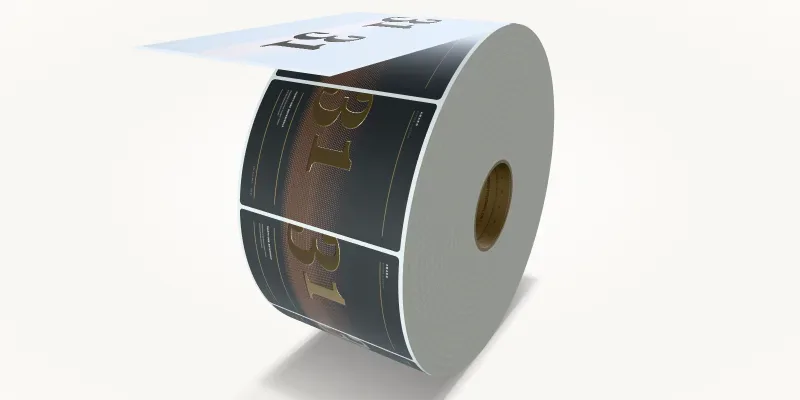
Instant label pricing
Upload your artwork and see the price
Drop in a PDF or AI file. PackOS reads the size, shape and colors and prices it from 10,000 labels per size.
Upload artwork →Bring the specification into a packOS label quote
Prepare artwork, quantities by SKU, construction requirements and roll/delivery specifications. Start a label quote, review detected attributes and confirm the selected specification. Artwork alone cannot establish the adhesive, application conditions or approved construction.
Review available quantities and the quote’s tooling, delivery and approval assumptions before confirming. Ask the team about a material or finish that is not confirmed. For a larger program, use the enterprise roll-label buying guide to connect the SKU schedule, specification and release plan.
Frequently asked questions
How much do custom labels cost?
An actionable price needs finished dimensions, construction, print and finish requirements, quantities by SKU and roll/delivery specifications. Compare quotes with those inputs matched; a generic per-label range can hide different setup, tooling or delivery assumptions.
Is digital or flexo printing cheaper for labels?
Neither process name determines delivered price. Compare the actual production route, quantity by SKU, setup, tooling, finishing and delivery. First releases and unchanged reorders can have different economics.
What is a plate charge on a label quote?
It covers the printing plates needed for the specified plate-based route. Ask which separations or colors need plates, what the charge includes and what changes require replacement. Confirm ownership, storage and reuse terms rather than assuming every reorder has no tooling charge.
Will an unchanged reorder avoid tooling charges?
Possibly, if the supplier confirms existing tooling is available, suitable and reusable under the quoted terms. Confirm artwork revision, tooling condition, storage and any repeat setup charges.
Can multiple label SKUs share setup?
Some coordinated jobs may share charges, depending on construction, dimensions, process, finish and the supplier plan. Request the allocation explicitly and retain a quantity and approved artwork revision for each SKU.
What belongs in delivered cost per label?
Use the reconciled order total, including agreed printed-label charges, setup, tooling, proofing, freight and other applicable charges, divided by quoted delivered quantity. State exclusions and avoid counting included or shared charges twice.
Does ordering more labels always save money?
A quantity break may reduce purchase cost per label, but unused or obsolete inventory can offset the saving. Compare expected usage, storage limits, artwork changes and release timing. Separate quoted quantity from the quantity you expect to use.
Why can fewer print colors change a label quote?
The effect depends on the press configuration, imaging method, ink or toner use, coverage, white ink and finishing route. Ask the supplier to price the proposed artwork change; fewer colors do not guarantee an equivalent appearance or a specific saving.
Labels for your industry
Download the supplier quote comparison (CSV). Keep the worksheet instructions alongside it so line totals, shared charges and exclusions are treated consistently.